
Roof repair rules in Ireland
A roof repair is charged at 13.5% VAT when the materials come to no more than two-thirds of the price before VAT. The HSA's code for roof work says to assume a roof is fragile until a competent person says otherwise, and asbestos can be hidden in the roof of any building built or refurbished before 2000.
VAT, working on a roof safely, ventilation, asbestos and your rights with a roofer, from the official sources.
Free and no obligation. Your request goes to one roofer in your county, not a list.
- 13.5%VAT on a repair, within the two-thirds rule
- 23%VAT on materials bought on their own
- 2000built or refurbished before it, a roof can hide asbestos
- 10 mmeaves ventilation, cold pitched roof
VAT on roof work
Revenue lists roofing at the reduced rate for the supply and installation of roofing materials, and repairs to buildings at the reduced rate too, both under the two-thirds rule. The reduced rate is 13.5% and the standard rate 23%. Materials bought on their own are always charged at 23%. Revenue's entry for roofing.
- 13.5%reduced rate, supplied and fitted
- 23%standard rate, materials on their own
- Two-thirdsthe share of the price the materials must stay under, before VAT
The test uses figures before VAT. If the materials are worth more than two-thirds of the price, the whole job moves to the standard rate. A roofer who is not registered for VAT should not charge you VAT at all, the CCPC says.
Price your roof leak
Three taps and the price shows as you go. Your name and number come last, and only if you want a roofer to ring.
A leak, source not found yet, in heavy rain, two-storey house: €150 to €375.
How the price is worked out
Each figure is a range from Irish roofers' and roofing booking pages. The range is the repair for the part of the roof you pick, from the smallest job to the biggest one people usually need there. If water is coming in now, the emergency call-out range is added on top. A tall house can need scaffolding, and that is shown as its own line. Use it to plan with. It isn't a quote: a roofer prices yours after looking at the roof.
Working on a roof safely
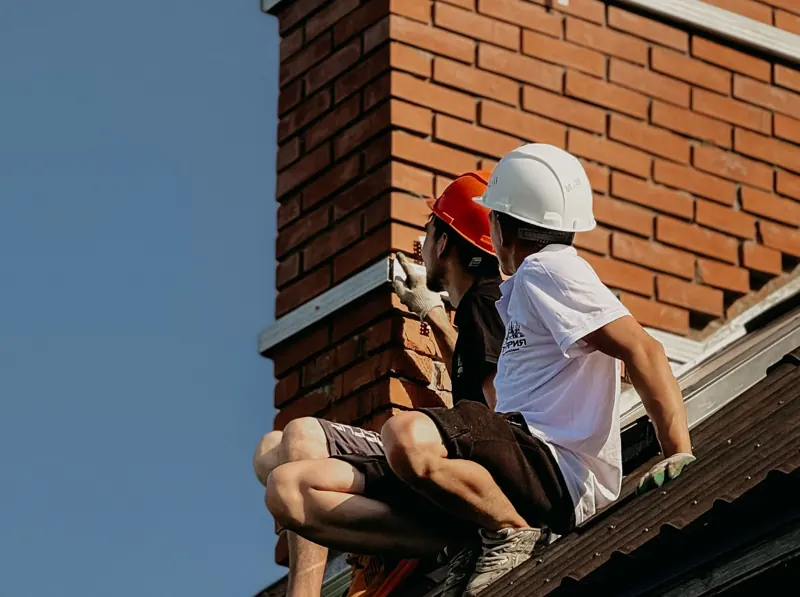
The Health and Safety Authority's Code of Practice for Safety in Roofwork covers anyone who works on a roof, and maintenance counts as construction work under it. It says:
- Assume the roof is fragile unless a competent person confirms otherwise. If in doubt, treat it as fragile.
- Weather changes the footing. Rain, ice or snow can turn a secure footing into a slip hazard, and a sudden gust of wind can take someone's balance.
- Look before you start. A roof should be inspected before work begins, to see whether conditions have changed.
- Not in the wind. Roof sheets, and in some cases roofing felt, should not be fixed in windy weather.
- The right access. On most sloping roofs, roof ladders or crawling boards are needed as well as edge protection. Eaves gutters are not a footing and must not hold up a roof ladder.
So a roofer who won't go up in a gale is following the code, and it is why a roof is often covered for now and repaired once it is dry. The code also says roofs should be inspected by people who are trained and experienced, which is a reason to stay off yours. The HSA roof work code.
Ventilation and condensation
Part F of the Building Regulations has a requirement for roofs, F2: adequate provision shall be made to prevent excessive condensation in a roof, or in a roof space above an insulated ceiling. Technical Guidance Document F shows how:
- 10 mma continuous gap's worth of eaves ventilation on opposite sides of a cold pitched roof
- 25 mmthe same on two opposite sides of a cold flat roof, or a roof under 15°
- 50 mmfree air space between the deck and the insulation of a cold flat roof
It also asks for a seal round pipes and cables through the ceiling and round the attic hatch, and it says a warm deck roof does not need ventilating. Insulation pushed into the eaves, or an open hatch, lets damp air reach a cold roof, and the condensation can look like a leak. Technical Guidance Document F. Leak or condensation.
Asbestos in the roof
The HSA says asbestos-containing materials can be hidden in any building built or refurbished before 2000. On the roof and outside walls, its list includes:
- Roof sheets, slates and tiles. Including fibre cement slates and sheets on older buildings.
- Roofing felt. And coatings on metal wall cladding.
- Soffit boards. Under the eaves, behind the gutter.
- Guttering and drainpipes. On older houses and outbuildings.
If nobody knows what the material is, presume it contains asbestos until it is shown otherwise and get competent advice. If dust or a material you suspect turns up during a job, the work stops. The HSA's asbestos leaflet. We do not give removal instructions here.
Your rights when you hire a roofer
The CCPC's advice for any home repair:
- Written quotes from more than one roofer. The CCPC suggests at least three.
- The details in writing. The price, a finish date, how payment works and what will be done.
- References. From recent jobs.
- No large sum up front. And not the full price before the work is finished.
- Pay by card. Credit or debit card, not bank transfer or Revolut.
- Deposit terms in writing. Before you pay one.
The Consumer Rights Act 2022 covers the work: it should be done to the agreed standard and in the agreed time, or a reasonable time if none was set. Where it isn't, the remedy can be a repair, ending the contract with a refund, or a price reduction. The Small Claims Court deals with claims up to €2,000 and costs €25 to use. The CCPC on building work disputes.
Questions before you book
What VAT rate applies to roof repairs?
A roof repair is charged at the reduced VAT rate of 13.5%, as long as the materials come to no more than two-thirds of the price before VAT. If they come to more, the whole job is charged at 23%, and materials bought on their own are always 23%.
What is the two-thirds rule?
If the materials cost more than two-thirds of the total price, both before VAT, the materials' rate applies to the whole job. For roof work that means 23% instead of 13.5%.
Can a roofer work in the rain?
The HSA's code for roof work says rain, ice or snow can turn a secure footing into a slip hazard and a sudden gust of wind can take someone's balance. A roofer may cover the damage for now and come back in drier, calmer weather for the lasting repair.
Do I need to worry about asbestos in my roof?
The HSA says asbestos can be hidden in any building built or refurbished before 2000, including in roof sheets, slates, tiles, roofing felt, soffits and gutters. If nobody knows, presume it is there and get competent advice before anything is cut or brushed.
How much ventilation should a roof space have?
For a cold pitched roof, Technical Guidance Document F asks for eaves openings on opposite sides equal to a continuous 10 mm gap. A cold flat roof needs 25 mm and a 50 mm air space above the insulation.
What can I do if a roof repair goes wrong?
Go back to the roofer first. Under the Consumer Rights Act 2022 the remedy can be a repair, a refund or a price reduction. The Small Claims Court deals with claims up to €2,000 and costs €25 to use.
Everything on this site
Where it leaks
Costs, rules and insurance
See the price before anyone rings
Tap where the water comes in and how bad it is. When you want a firm price, it goes to a single roofer in your county.